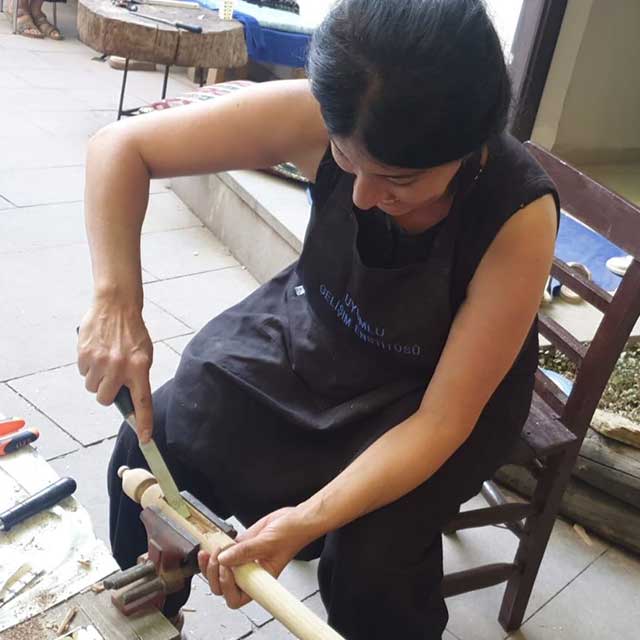
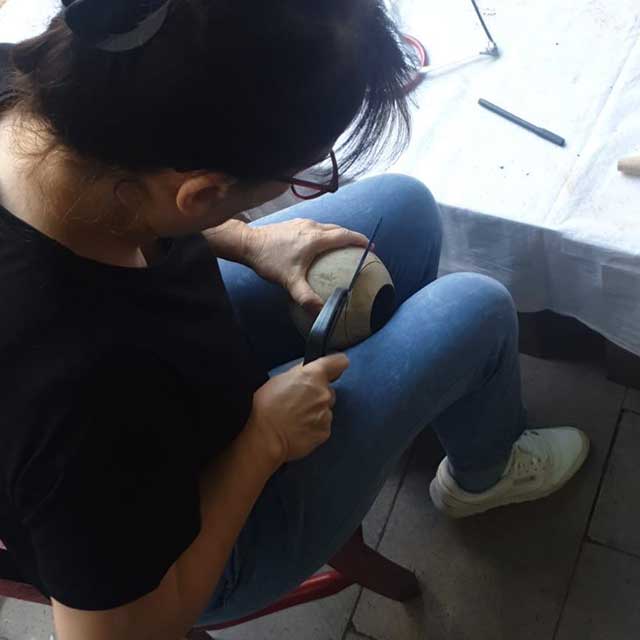
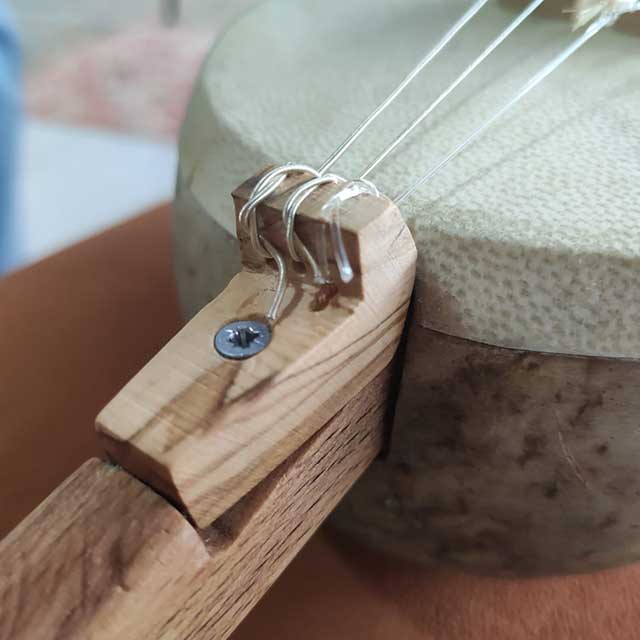
The rebab-making workshops are an extension of the rebab courses we run, focusing directly on the making of the instrument itself.
The aim of the workshops is for each participant to build their own rebab by experiencing every stage from beginning to end.
In this process, participants gain technical knowledge and hands-on experience of the instrument’s making; by coming to know the rebab more closely, they deepen their relationship with it.
Upcoming Workshops
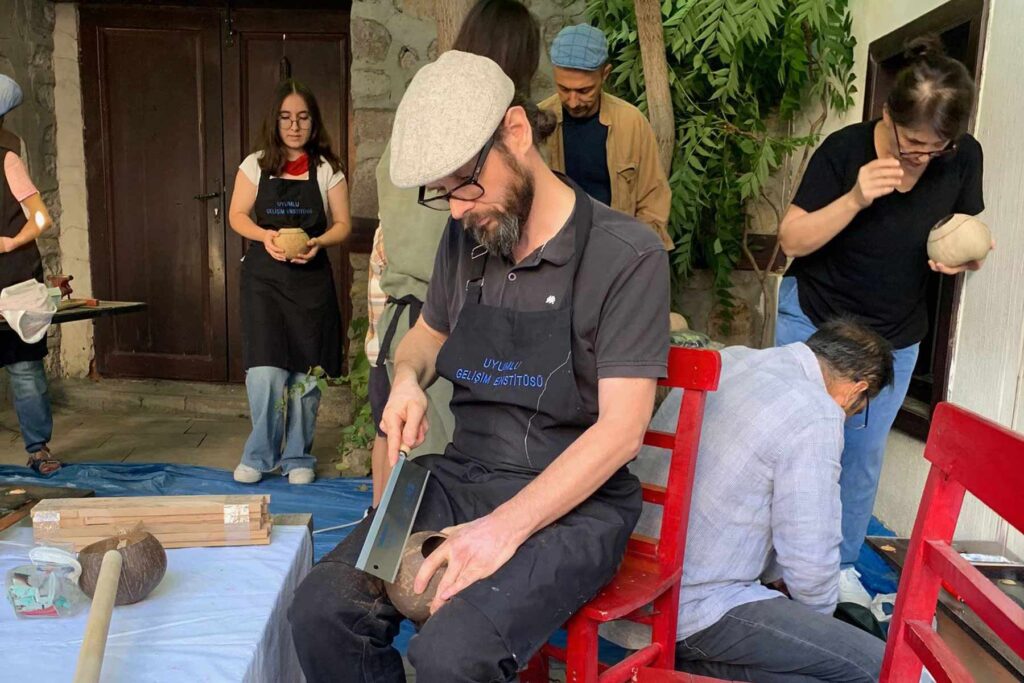
Rebab-Making Workshop | 2–6 September 2026
At the rebab-making workshop to be held at Ankara Castle on 2–6 September 2026, participants will build their own instruments from start to finish, gaining technical knowledge and hands-on experience of the process.
About the Rebab
Rebab is a general name given to a family of instruments—differing in form—played with a bow or plectrum across various regions of Central Asia and the Islamic world. It has many varieties, such as the Turkish, Egyptian, Maghrebi, Iraqi, Indonesian, Uyghur, Afghan and Pakistani rebab. Organologically belonging to the “spike fiddle” class, the Turkish rebab is historically traced back to the ıklığ, the bowed instrument of the Central Asian Turks.
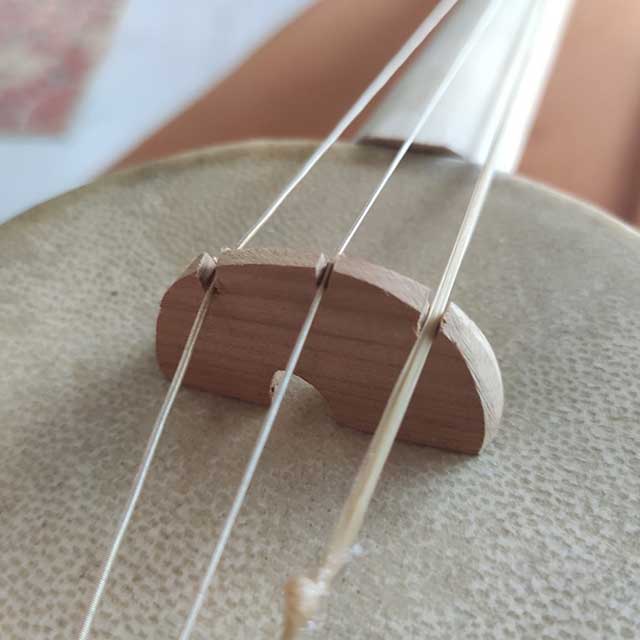
The rebab played in Turkey—the one whose making is taught in the workshop—is a three-stringed, fretless, bowed instrument made by stretching hide over a coconut shell. Almost all of its parts—body, hide, horsehair and wood—come from separate origins. At the beginning of the Rebabnâme, Sultan Veled points to this multiplicity: whereas the ney laments the separation of a single reed, the rebab’s cry is greater and more varied because each of its parts has been torn from its own origin. This thought, which he ties to the opening of Rumi’s Mesnevî, is summed up in the saying, “If the ney laments once, the rebab laments a thousand times.”
The history of the rebab in Anatolia is intertwined with the Mevlevî tradition. According to Abdülbaki Gölpınarlı, the rebab came to Anatolia together with Rumi’s caravan. Gölpınarlı notes that both Rumi and his son Sultan Veled played the rebab; certain couplets in the Dîvân-ı Kebîr suggest that Shams-i Tabrizi may have played it as well.
Being made of various organic materials, the rebab is sensitive to changes in humidity and temperature, which makes holding its tuning harder than for many other instruments. Combined with the difficulty of playing on its long, fretless neck, this led over time to a decline in the number of rebab players, and the instrument came close to being forgotten.
At a time when rebab players in Turkey numbered no more than the fingers of one hand, Rahmi Oruç Güvenç took up the cause and, through the training he gave both in Turkey and abroad, helped increase the number of people playing the instrument. Within this effort he organised two rebab tours, one in 2002 and another in 2007, which together drew close to 40 performers from Turkey and abroad.
Today, Güvenç’s students continue to perform the rebab and to teach it.
Participants’ Work and Reflections
Dilek Türkmen
I ended up with a beautiful rebab, and I’m delighted.
Sharing the same purpose wholeheartedly and coming together turned out to be something quite different.
It was unconventional, devoted, sincere and moving.
Thank you so much.
Fatma Pehlivan
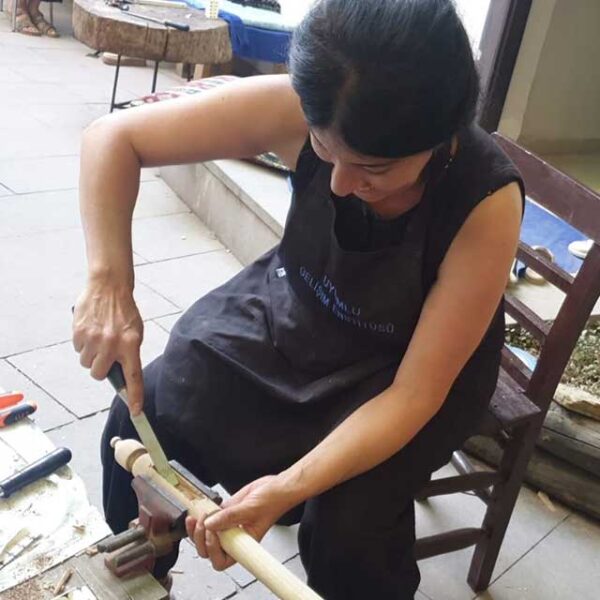
Throughout the workshop, the rebab was perhaps the most important thing 13 different people had in common. As we tried to bring it together from separate parts, it in turn brought together 13 very different people. For a shared purpose, everyone brought out and used every quality they had.
I enjoyed every single stage of it. I learned a great deal about the rebab. This experience showed me how much making your own rebab before you even begin to learn to play it strengthens the bond between you. Even though I still can’t get a sound out of my rebab, I loved it—especially its colour 🖤
As for the process, there were some waits, mainly because we were a large group relative to the tools we used for decorating the rebab. Apart from that, everything was wonderful. My heartfelt thanks to everyone who contributed.
And finally I say: how good it is that Oruç Hoca once tossed that coconut to Erşan abi, and that things came all the way here. 😊
Gamze Göncü
Beyond learning a great deal of technical knowledge about the rebab, the camp was a process full of awareness in which I formed a closer bond both with the instrument and with myself. Although it seemed as if body and mind were at work, deep down I felt it did my soul good too.
When I first took the rebab in my hands, I couldn’t quite define the bond between us. In time I realised that this instrument, whose timbre reaches into the depths—plain, essential, free of excess—touches the human heart often with even a single string. Its being just as it is reminded me of my own true nature and deepened the bond between us. So, even when I hesitated or felt torn during the making, I left it just as it was; this process taught me not to expect too much of myself.
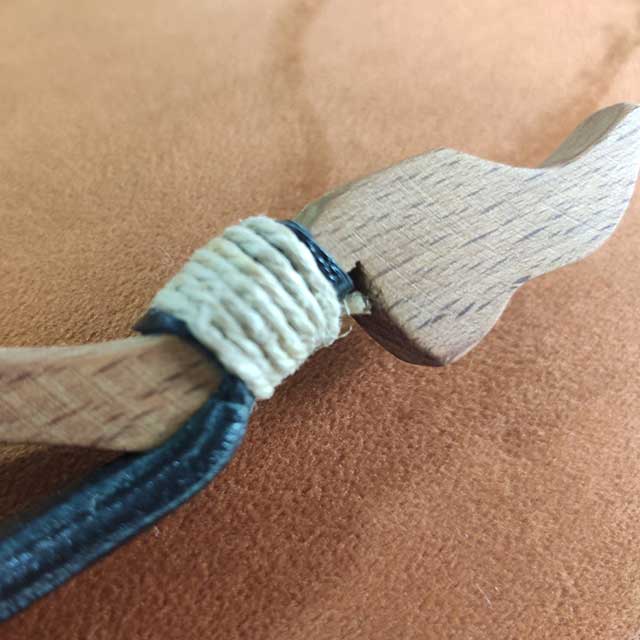
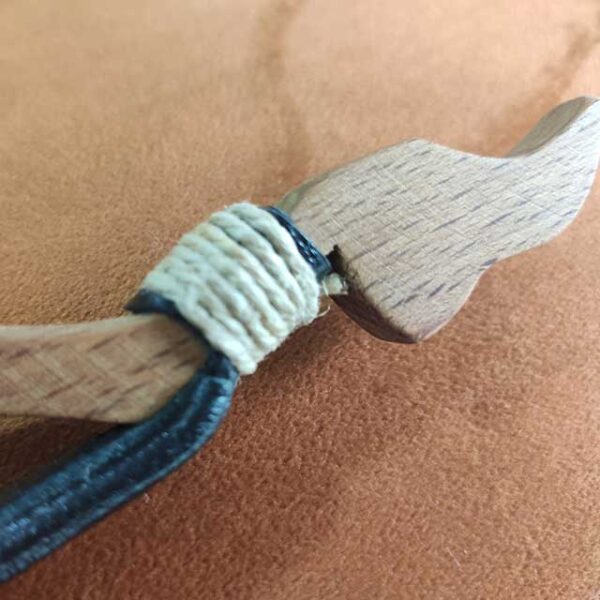
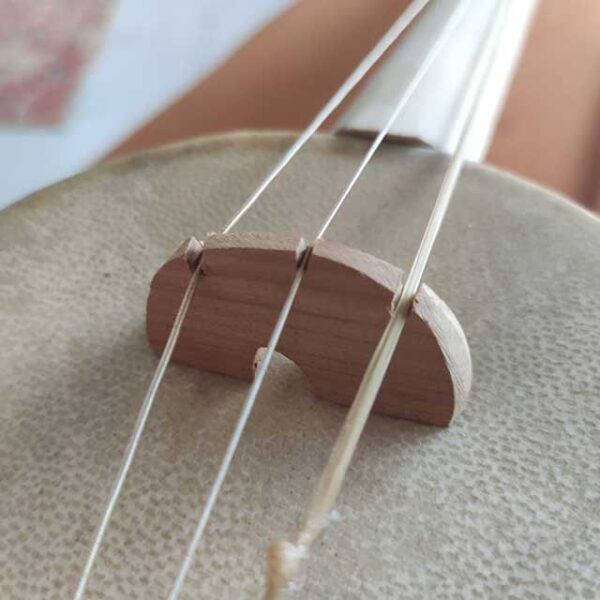
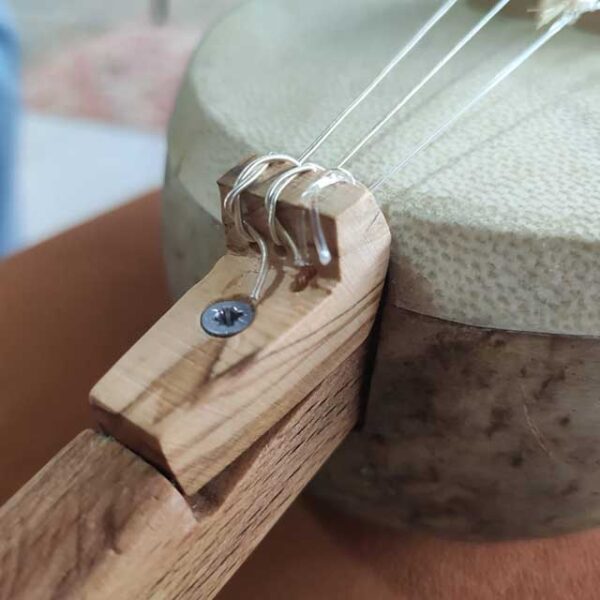
The screeching sound as the neck was drilled, the mishaps in making its bridge, needing help at many stages, at times simply not being able to do it, and the sound that just wouldn’t come once the strings were on… all of it evoked so much in me. In a space steeped in history and culture we gathered memories, and our sharing grew deeper.
I am grateful to the dear, soulful Oruç hoca who was the means of my meeting the rebab, and to all the teachers who opened this path for me. May their paths endure.
Suzan Koçak
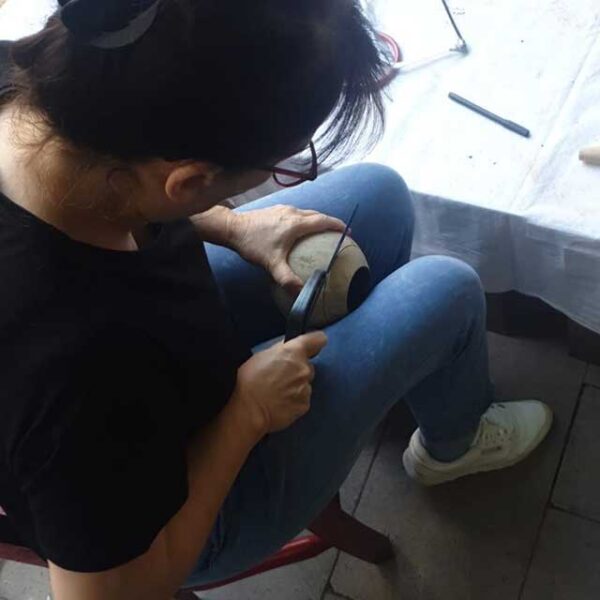
What I sought from life was to draw closer to the essence I had become separated from, and to find the direction I had lost. When this search became sincere, I saw that divine help came too. My greatest helper was my teacher Oruç. In those days I did not understand that when my teacher handed me the rebab and said, “you will carry on with this,” he was giving me the key to the Heart. One thing I now see more clearly is that I am continuing the journey with the rebab and with soul-friends.
This camp taught me that a beautiful sound arises when I attune myself, together with those close to their Lord, symbolised by the rebab. By “beautiful sound” we may think of a timbre, or we might call it a high-frequency vibration.
The rebab’s having 3 strings also evokes for me a particular tuning or harmony: 3 strings, 3 elements—body, mind, heart. Balancing these 3 elements recalls a saying of my teacher’s: the turning of our lower self into spirit, and of our speech into Life—that is, the transformation of the low-frequency, egoic self into a high-frequency, refined Spirit.
This workshop opened the way for me to observe my own feelings in order to attune myself while part of a group, and to see what I truly prioritise in life. I also learned that the most fulfilling feeling in a person’s life is to know they are loved and to realise they are cared for. I experienced this too, since my birthday happened to fall during the camp.
My heartfelt thanks to those who created the space for me to taste these beautiful experiences and who made them possible. With my respects to all the participants.
Contact
- Emre Başaran: +90 538 319 20 86
- Erşan Çırak: +90 532 470 63 18
- Oya Şafak: +90 539 257 67 82